



Jeff Elgie, CEO, Village Media, Canada

.png)
April 22, 2026 Case no. 41
Service Journalism
Service Journalism that Actually Pays Off – Lessons from Village Media
Many publishers talk about service journalism. Village Media has built its entire growth model around it. In this session, CEO Jeff Elgie explains how practical, everyday journalism—housing guides, school updates, local government coverage that people can use—has become a direct driver of reader revenue, stronger habits, and higher advertiser relevance. You will hear how they use AI to monitor local councils without losing editorial control, how their community platform increases engagement around specific topics, and why they now describe themselves as a “community impact organization” rather than just a media company. For publishers looking for concrete, replicable ways to turn utility into sustainable business results, this is a case worth studying closely.
Presented by Jeff Elgie, CEO, Village Media, Canada

Click the image to watch the webinar! (For first time visitors to the WAN-IFRA Knowledge Hub there will be an initial registration step.)
By Niklas Jonason
Summary
Village Media is a Canadian digital media company headquartered in Sault Ste. Marie, Ontario, that operates an extensive network of hyperlocal online news and community websites. Founded by CEO Jeff Elgie, the company employs a reach-based, ad-supported business model that prioritizes community engagement, service journalism, and local business integration over traditional subscription-based models. The organization utilizes its own proprietary, in-house content management system, often referred to as "Villager" or "Community Engine," which it also licenses to other publishers globally. Operating a "community impact" model, Village Media integrates original investigative reporting with essential utility content—including weather, event calendars, obituaries, and classifieds—while expanding its digital ecosystem through "Spaces," a localized social networking platform designed for interest-based community discussion.
The company maintains a distributed but efficient operational structure, leveraging a centralized news desk to manage repetitive tasks across its sites, which allows local reporters to focus on original journalism while maintaining profitability through a diverse, local-first commercial product mix. By focusing on communities with a strong sense of identity, Village Media functions as a digital utility that drives both high-intent traffic for advertisers and the necessary scale to sustain professional local news. Moving forward, Village Media is focused on the development of a "Community Operating System," an initiative that integrates its technological stack with AI-driven tools, such as a conversational chatbot designed to help citizens in need access verified local support services like food banks, housing, and mental health resources.
Actionable ideas
Here are the main actionable ideas of the Village Media case, as we see it.
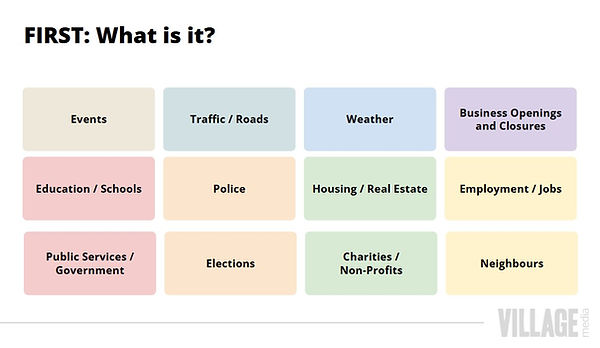
Leverage Service Journalism as a "Local Utility": Prioritize essential content—such as weather reports, traffic updates, business closures, and event listings—to build daily reader habits.This high-intent traffic acts as the foundation for the business, allowing deeper investigative and civic reporting to thrive because the audience is already present.
Adopt a "Reach-Based" Monetization Strategy: Rather than relying solely on restrictive paywalls or subscription models, prioritize building massive local reach through ad-supported content. Use this broad audience to offer differentiated local advertising products—such as business profiles, listings, and auctions—that provide measurable value to local businesses.
Implement Centralized Operational Efficiency: Use a centralized news desk to manage repetitive, low-editorial-effort tasks across all network sites (such as rewriting press releases, moderating comments, or aggregating obituaries). This structure allows local reporters to focus their resources exclusively on high-value, original journalism. Also centralize functions such as finance, HR, tech e.t.c. and dedicated local staff to out-on-the-field journalism and revenue.
Build a Hyper-Local Community Network ("Spaces"): Create a passion-focused social platform managed by local enthusiasts rather than journalists. This should be deeply integrated into the main news site via widgets and cross-linking to foster community connections in a safe, troll-free environment that is also "business-ready" for advertisers.
Formalize Community Impact Initiatives: Develop a "CARES" team or similar structure to mobilize readers and local business partners for charitable causes, such as rapid food bank restocking or recognizing community leaders. This strengthens the organization's role as a vital local institution.
Deploy AI as an Operational Force Multiplier: Use AI to analyze complex documents (e.g., long City Council agendas) to extract local issues and suggest story angles for reporters. Additionally, use AI to assist with light editing, poll generation, comment moderation, and analyzing historical content performance to refine content strategy.
Develop a "Community Operating System": Aim to create a unified civic infrastructure that integrates news, conversation, and participation. An actionable example is to build a conversational chatbot-driven resource directory that provides citizens with immediate, verified access to essential support services like housing, food banks, and mental health assistance.
Build "Playbooks" for Scalability: Create and refine standardized operational playbooks for every aspect of the business—including community launches, editorial standards, and sales processes—to allow for successful replication across new markets.
Target Appropriate Markets: Be cautious of "news deserts" where local audiences may have lost the habit of consuming news. Instead, look for markets with a strong existing sense of identity where residents "live and work," or enter markets immediately following the closure of a legacy newspaper to "vacuum up" the remaining audience by hiring the displaced journalists.
About the Speaker: CEO Jeff Elgie
Jeff Elgie is a pioneering digital media executive who has spent over 20 years building and leading innovative businesses at the intersection of technology and journalism. A 1997 graduate of Western University, Jeff began his entrepreneurial journey by founding an IT company before transitioning into the media landscape. He first became involved with Village Media as an IT consultant, subsequently joining the organization as owner and CEO 13 years ago. Under his leadership, the company has expanded from a local operation in Northern Ontario into an expansive international network serving five million weekly readers across 60 owned-and-operated and partner websites. His commitment to sustainable local news is further underscored by the company’s leadership, which includes Chairman Richard Gingras, the renowned former Google executive.
Facts about Village Media
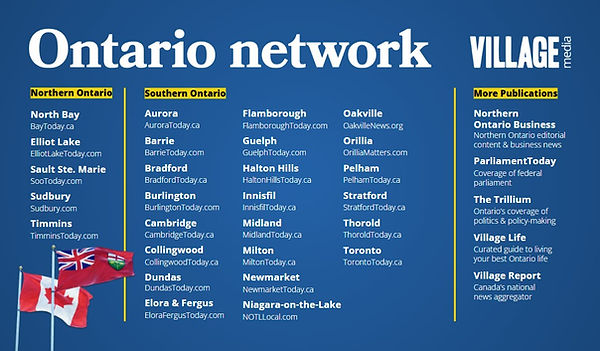
Village Media, founded by CEO Jeff Elgie, is a 13-year-old digital-only media company headquartered in Sault Ste. Marie, Ontario, that operates a network of 27 local news sites across the province. The company's origins trace back to the acquisition of "SooToday," an early site that has been operating for approximately 23 years. Village Media serves communities ranging in size from 10,000 to 250,000 residents, while also managing five specialized publications, including regional business, federal and provincial political bureaus, and a lifestyle site. Beyond its own news sites, the company develops and licenses its proprietary technology platform, "Villager," to approximately 50 other publishers in Canada and the United States. Financially, the company has demonstrated strong performance, reporting a 25% revenue growth and a 15% profit margin on annual revenues exceeding USD 10 million.
The unique definition and mission of Village Media
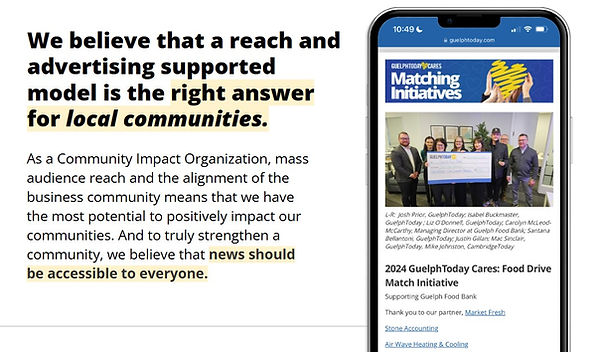
Village Media defines itself not merely as a local news organization, but as a "community impact organization". This unique designation reflects a core mission dedicated to strengthening the specific communities the company serves. By viewing their role through this lens, Village Media shifts the focus from traditional publishing metrics to the tangible, positive impact they can have on the civic and social health of their readers. This mission is reinforced by a reach-based, ad-supported business model; because the organization connects with a large portion of the community, they are better positioned to drive positive local change than they would be under a restricted subscription model.

The five pillars
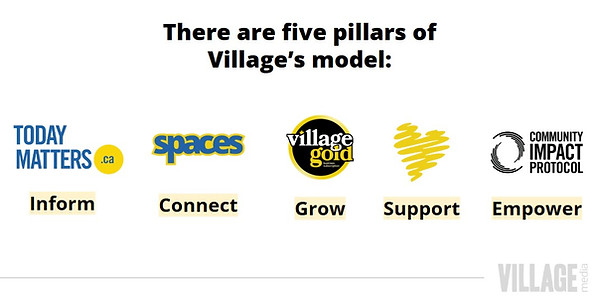
Village Media structures its operations around five core pillars that transform traditional publishing into a holistic "community impact organization".
-
Inform: This is the foundation of the business, focusing on local news and service journalism. By covering everything from city council and healthcare to weather and community events, Village Media builds a shared reality for its readers.
-
Connect: Through their proprietary platform "Spaces," Village Media provides a safe, interest-based social network. Unlike global social media, Spaces is hyper-local and topic-driven, allowing residents to connect over shared passions like hockey, gardening, or local music in a moderated, troll-free environment.
-
Grow: This pillar focuses on the commercial engine that sustains the model. Beyond traditional display ads, Village Media partners with local businesses through a sophisticated suite of products—including the "Community Leaders" sponsored journalism program, "Village Gold" business subscriptions, and advanced directory tools like "Goldmine"—to drive measurable value for the local economy.
-
Support: Managed by the "CARES" team, this pillar formalizes the company’s commitment to the charitable sector. Through programs like Random Acts of Kindness and GoodWorks matching initiatives, the company mobilizes its readers and local business partners to provide rapid support to those in need, whether restocking a food bank in 48 hours or organizing major life-changing gifts for community members.
-
Empower: This pillar represents Village Media’s most advanced civic engagement work. Through the "Community Impact Protocol," the company uses market research to identify urgent local issues—such as the opioid crisis—and convenes stakeholders, facilitates public deliberation through "Community Conversations," and presents actionable recommendations to local government.
Village Media has built and refined playbooks that set the standard for community publishing.


The reach based monetization
Village Media’s community model is built on a "reach-based" strategy, aiming for a daily readership of 25% of a city’s total population, or approximately 40% of the adult population. To achieve this, the company employs predictable operational formulas, such as maintaining a newsroom ratio of one journalist for every 15,000 residents and publishing 12 to 18 pieces of content daily—a mix that balances essential service journalism, such as weather and traffic updates, with deep original reporting. This strategy relies on aggressive audience acquisition, using everything from paid search and social media advertising to billboards and direct mail to build awareness and drive traffic into acquisition funnels. By targeting communities with a strong sense of local identity where residents truly "live and work," the model creates a habit-forming product that keeps readers returning.
Monetization is achieved through a diversified product mix that prioritizes local relevance over restrictive paywalls. Approximately 70% of revenue is generated by direct, on-the-ground local sales teams, complemented by programmatic advertising and a voluntary reader contribution program rather than mandatory subscriptions. The company leverages the "Live Here, Work Here" affinity of its readers to offer differentiated local advertising products—such as business profiles, listings, and auctions—which provide measurable value to local businesses that would be impossible to capture through standard display ads alone. This reach-based architecture ensures that Village Media acts as a local utility, where high-intent traffic from service-oriented content drives the commercial performance necessary to fund the company's deeper community impact initiatives


How Service Journalism works for Village Media
Service journalism serves as the operational and financial backbone of Village Media, acting as a "local utility" that provides essential, daily information such as weather reports, traffic updates, business closures, and event listings. Rather than being viewed as secondary, this content is prioritized because it attracts large, repeatable audiences and successfully combats "news avoidance" by offering information readers need to navigate their daily lives. By focusing on these practical daily needs, Village Media builds a consistent habit among readers, slowly converting passive, casual users into more engaged consumers of the company's deeper investigative and civic reporting.
Operationally, this model thrives on efficiency and scale. Village Media utilizes a centralized news desk to manage routine tasks—such as rewriting press releases, moderating comments, or aggregating obituaries—across all 27 communities, which allows local reporters to focus exclusively on high-value original journalism. This mix of content is vital to the company's profitability; for instance, while original journalism accounts for 22% of page views, it requires a staff of 200, whereas obituary aggregation drives an equal 22% of page views with only two full-time employees. Ultimately, this balance of high-volume service journalism and specialized reporting creates an essential community resource that drives both high-intent traffic for advertisers and the necessary scale to sustain professional local news.



Village Medias own social media channel: SPACES
Spaces" is Village Media’s hyper-local community interest network, designed to function as a passion-focused alternative to global social media platforms like Facebook or Nextdoor. Rather than hosting inflammatory political debates, Spaces is organized around specific local interests—such as gardening, live music, cycling, or hockey—creating a digital environment that effectively crowd-sources a community-driven form of service journalism. These spaces are primarily managed by local enthusiasts and subject-matter experts rather than journalists, fostering authentic community participation while keeping moderation requirements low. The platform is deeply integrated into Village Media’s main news sites through navigation widgets and cross-linking, ensuring a seamless flow of information between editorial content and user-driven discussion. Furthermore, Spaces emphasizes safety through rigorous account validation and the use of real names, which eliminates trolling and incentivizes constructive, real-world connections. This commitment to offline impact is evident in the platform's ability to drive real-world events, such as reading clubs, car meetups, and wellness workshops, all while remaining fully integrated with the company's "Village Gold" commercial product suite.

AI at Village Media
At Village Media, artificial intelligence is deployed as an operational force multiplier designed to drive efficiency rather than to replace human journalism. The company focuses on using AI to help local editors quickly identify important information within the community. A core technical application involves using AI to analyze large documents and datasets, such as 380-page City Council agendas, which allows the system to extract key local issues, compare them against historical coverage, and suggest relevant story angles and interview questions for reporters.
Furthermore, Village Media leverages AI to assist in light editing, generate community polls, suggest questions to precede comment threads, and moderate discussions. Beyond the newsroom, AI evaluates content based on archives and historical performance to help the company understand deep engagement beyond simple page views. These tools extend to driving operational efficiency across the entire organization, including advanced reporting for client services, prospecting tools for the sales team, and optimized workflows for the sponsored content studio. Ultimately, these applications allow journalists to focus on high-value tasks—such as talking to people and gathering information—that AI cannot replicate.

What’s Next
Village Media is currently developing the world’s first "Community Operating System" (COS), a project designed to serve as a living civic infrastructure. This advanced initiative leverages artificial intelligence across the organization's entire technological stack, integrating the "Villager" news platform, the "Spaces" hyper-local social network, and internal tools. Beyond optimizing internal operations, the COS aims to create a unified platform that connects journalism, civic conversation, and public participation. A primary feature currently in development is a supercharged resource directory that utilizes a conversational chatbot to provide citizens with immediate, verified access to essential local support services—including housing, food, mental health, addiction, and domestic violence support. This tool is being built in close cooperation with a network of community organizations and agencies, with a market launch expected in the coming months.

Questions and Answers
Financials and Business Model
Question 1: How are you doing financially, and what drives your results?
Answer: Village Media generates over $10M USD (approx. $16–17M CAD) in revenue. They operate with a target profit margin of 10% after accounting for full expensing of market expansion costs. In mature markets, individual sites achieve profit margins exceeding 50% on $3M in annual revenue.
Question 2: What is the "commercial backbone" of the operation?
Answer: The DNA is commercial, not purely editorial. The model started as a failed coupon site that pivoted to news to drive traffic. Success is built on digital agency experience—understanding web analytics, audience acquisition, and local digital advertising—rather than traditional publishing heritage.
Question 3: How do your two main revenue sources (local business listings vs. national partnerships) work?
Answer:
-
Local: They treat local businesses as partners in their mission, not just ad buyers. This includes display ads, sponsored content, and classifieds, bundled into a "Village Gold" subscription.
-
National: By scaling to a large network, they secure provincial government and agency contracts that require broad geographic reach, which a single local site cannot provide.
Editorial Strategy
Question 4: What is your view on the future of service journalism versus the trend to emphasize it less?
Answer: Elgie strongly disagrees with reducing service journalism. He argues that as traditional newsrooms (newspapers, TV, radio) shrink, on-the-ground local gathering becomes scarcer and thus more valuable. They use AI to assist with efficiency, but they view human, local reporting as the core asset that AI cannot replicate.
Question 5: What is your target market? Are "news deserts" your ideal target?
Answer: No. They are cautious of true news deserts because residents there often lack the "muscle memory" or habit of consuming local news. They thrive best in competitive markets with a strong existing community identity. They only target deserts when a legacy paper closes, as they can "vacuum up" the audience by hiring the departing journalists.
Question 6: How do you maintain editorial integrity given the commercial focus?
Answer: A strict wall exists between commercial and editorial operations. Sales staff can offer tips, but they have zero control over coverage. Even in sponsored programs (Community Leaders), the advertiser buys the section but has no influence on the content produced by the editorial team.
Community and Engagement
Question 7: How do your informational channels (news) and "Spaces" (community platform) interact?
Answer: It is a hybrid of structural and organic integration.
Structural: Homepages and "Spaces" feature widgets/navigation links to one another.
Organic: Journalists profile Spaces hosts, embed user discussions into news stories, and news articles are posted into Spaces to trigger conversation.
Question 8: Do you reach different audiences with these various channels (polls, spaces, news)?
Answer: Yes, with slight variations. "Village IQ" (polls) skews toward older demographics, while "Spaces" attracts a slightly younger—though not teenage—audience.
Question 9: What is your strategy for reaching younger (Gen Z) audiences?
Answer: None. They do not believe in chasing 15-year-olds. Their strategy is that people "age into" their product. As individuals reach the stage of life where they buy homes, start families, and hold jobs, they naturally become more engaged with local news. The core focus remains on the 25+ demographic.
The presentation, useful links and contact information
-
Jeff Elgie's slide deck (PDF)
-
Jeff Elgie's contact information: jeff@villagemedia.ca
-
Village Media coprorate website
-
One of the core communities of Village Media is Soo Today
-
You are welcome to contact the WAN-IFRA Innovate Local team, if you have questions or examples of similar cases.
-
Cecilia Campbell: c.campbell@wan-ifra.org
-
Niklas Jonason: n.jonason@wan-ifra.org
-